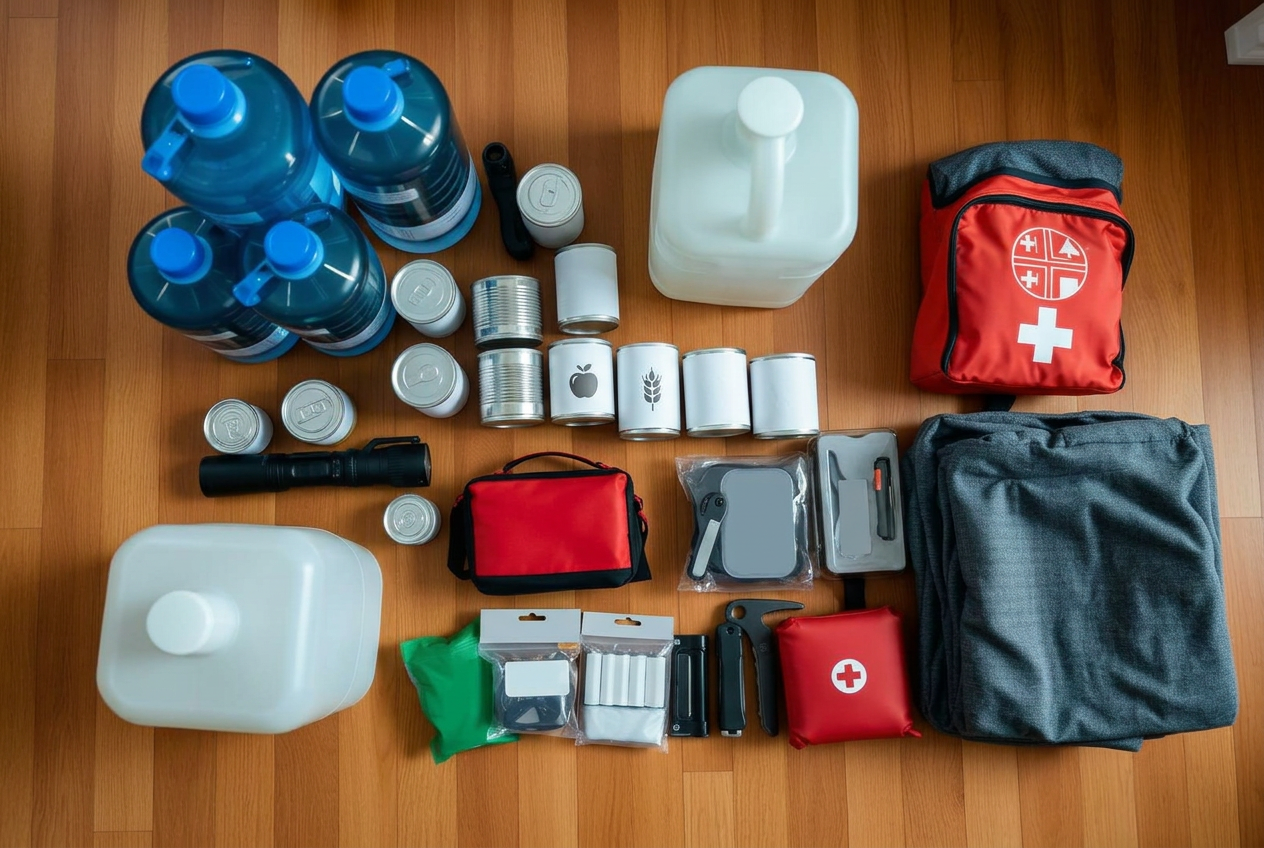
Complete Emergency Home Supply Checklist
A good emergency home supply checklist is not about fear — it's about giving your family a calm, practical path to emergency readiness. This guide walks you through everything a household needs to weather a power outage, severe weather event, or natural disaster with confidence, whether you're a first-time prepper or refreshing supplies you built years ago.
Every category below is organized the same way: what it is, why it matters, how much to store, how to keep it fresh, and budget-friendly alternatives. Start with water, food, and medical — then work your way through the rest one weekend at a time.
Water
Critical- ✓Drinking water
- ✓Water storage containers
- ✓Water purification tablets
- ✓Water filters
Food
Critical- ✓Canned foods
- ✓Freeze-dried meals
- ✓Protein bars
- ✓Peanut butter
- ✓Rice
- ✓Pasta
- +4 more →
Medical
Critical- ✓First aid kit
- ✓Prescription medications
- ✓Pain relievers
- ✓Bandages
- ✓Thermometer
- ✓Medical gloves
- +1 more →
Lighting & Power
High- ✓Flashlights
- ✓Lanterns
- ✓Batteries
- ✓Solar chargers
- ✓Portable power station
- ✓Power banks
- +1 more →
Communication
High- ✓NOAA weather radio
- ✓Phone chargers
- ✓Printed emergency contacts
- ✓Family communication plan
Hygiene
High- ✓Toilet paper
- ✓Soap
- ✓Toothpaste
- ✓Feminine hygiene products
- ✓Baby wipes
- ✓Trash bags
- +1 more →
Shelter & Warmth
High- ✓Blankets
- ✓Sleeping bags
- ✓Emergency (mylar) blankets
- ✓Extra clothing
- ✓Rain gear
- ✓Tarps
Tools
Medium- ✓Multi-tool
- ✓Fire extinguisher
- ✓Duct tape
- ✓Rope
- ✓Work gloves
- ✓Plastic sheeting
- +2 more →
Important Documents
High- ✓IDs
- ✓Insurance
- ✓Medical records
- ✓Emergency contacts
- ✓Home inventory
- ✓Financial information
- +2 more →
Pet Supplies
Medium- ✓Food
- ✓Water
- ✓Medication
- ✓Leash
- ✓Carrier
- ✓Vaccination records
- +1 more →
Water Storage
Why it matters
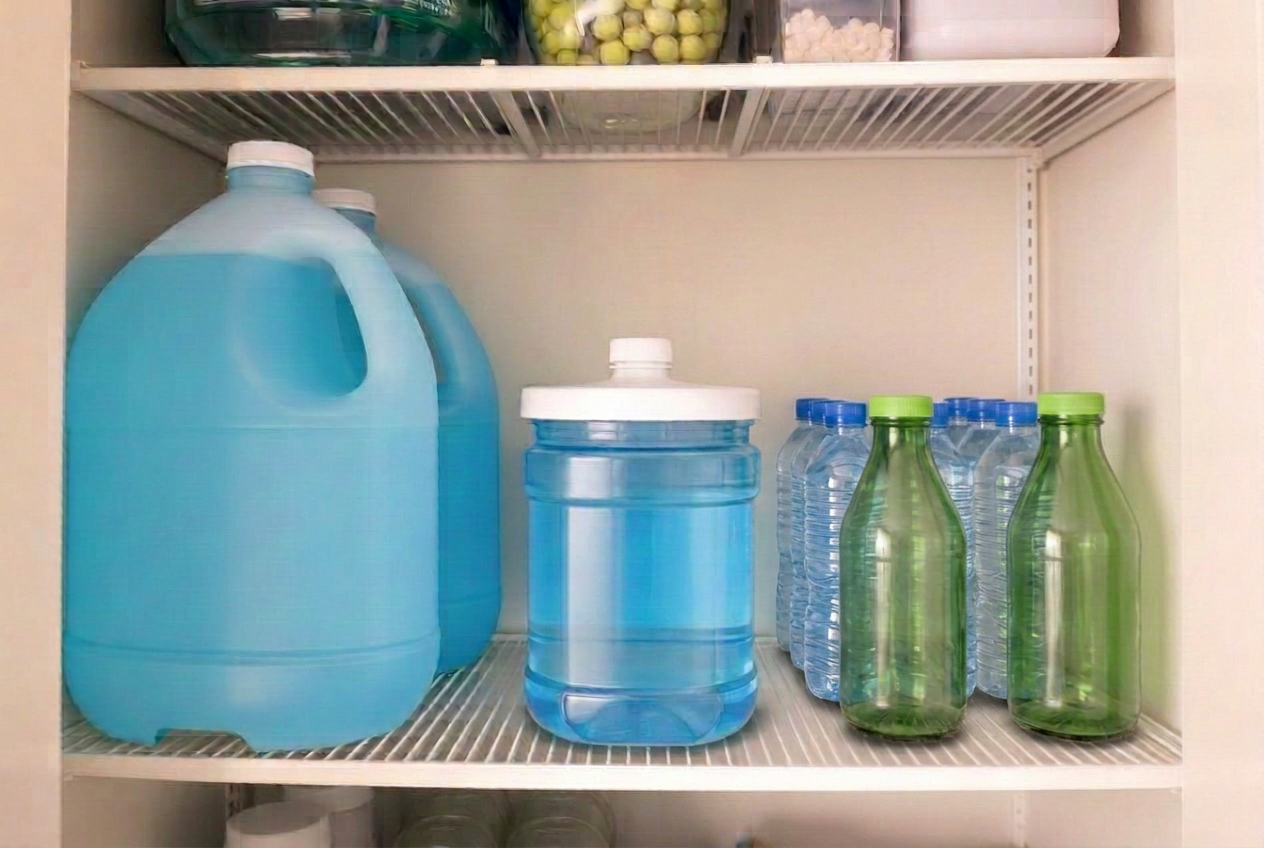
Water is the single most important item in any emergency kit. The human body can only survive a few days without it, and municipal systems are often the first utility to fail during floods, freezes, and grid outages.
Storage & rotation tips
- Store 1 gallon per person per day — half for drinking, half for hygiene and cooking.
- Use food-grade containers, kept out of direct sunlight, at 50–70°F when possible.
- Rotate commercially bottled water every 6–12 months; sealed water-storage jugs last several years.
- Keep a manual water filter or purification tablets as a backup for longer emergencies.
Budget alternative
A case of bottled water plus purification tablets covers a small household for under $30.
Common mistake
Storing water in old milk jugs — they degrade and can leach bacteria.
Food Storage
Why it matters
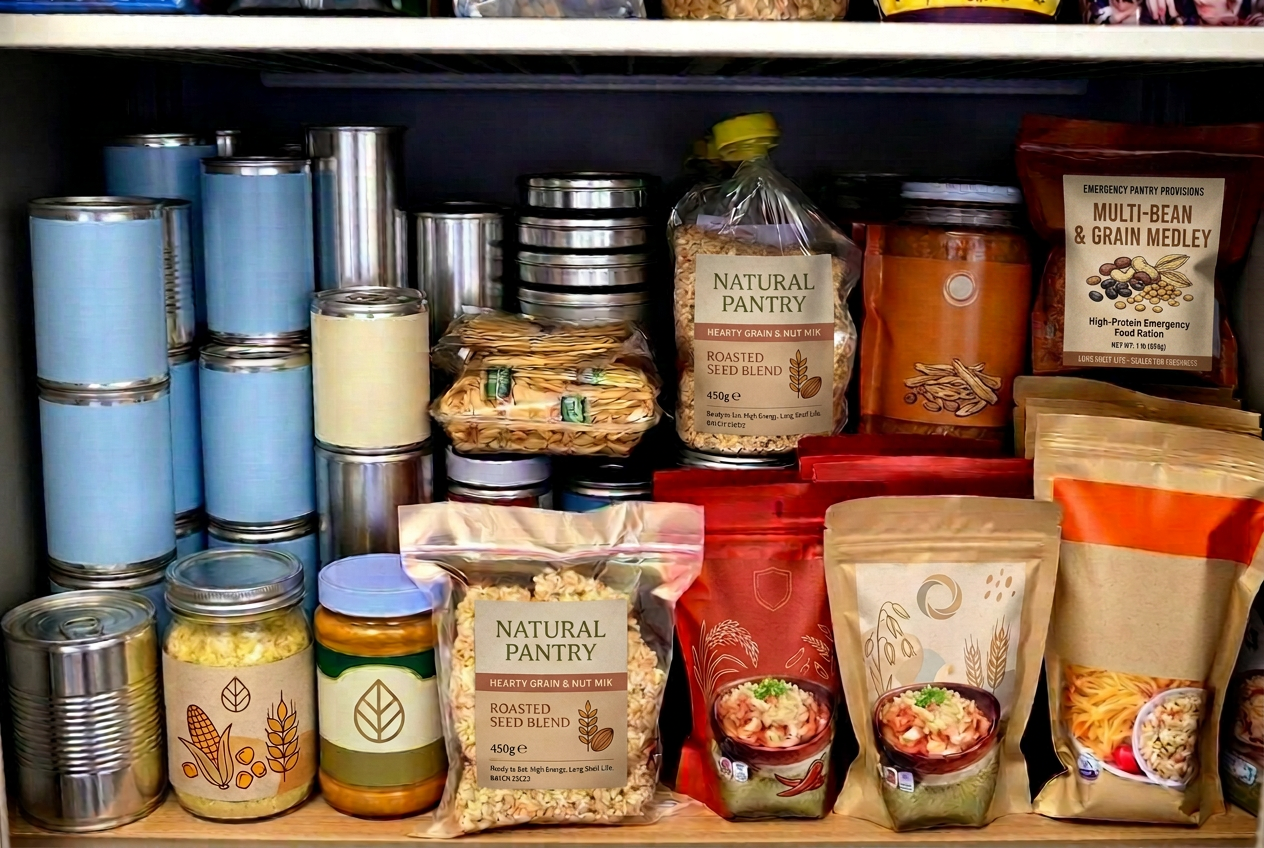
An emergency pantry keeps your household fed and calm. Choose shelf-stable foods your family already eats so nothing goes to waste when you rotate.
Storage & rotation tips
- Aim for 2,000 calories per person per day.
- Mix quick-eat items (protein bars, peanut butter) with cook-if-you-can staples (rice, pasta, oatmeal).
- Always include a manual can opener — even one — stored with the food.
- Label every container with the purchase date and use first-in, first-out rotation.
Budget alternative
Add one case of canned goods or a bag of rice to your grocery run each week.
Common mistake
Buying survival buckets full of foods no one in your family will actually eat.
Medical Supplies
Why it matters
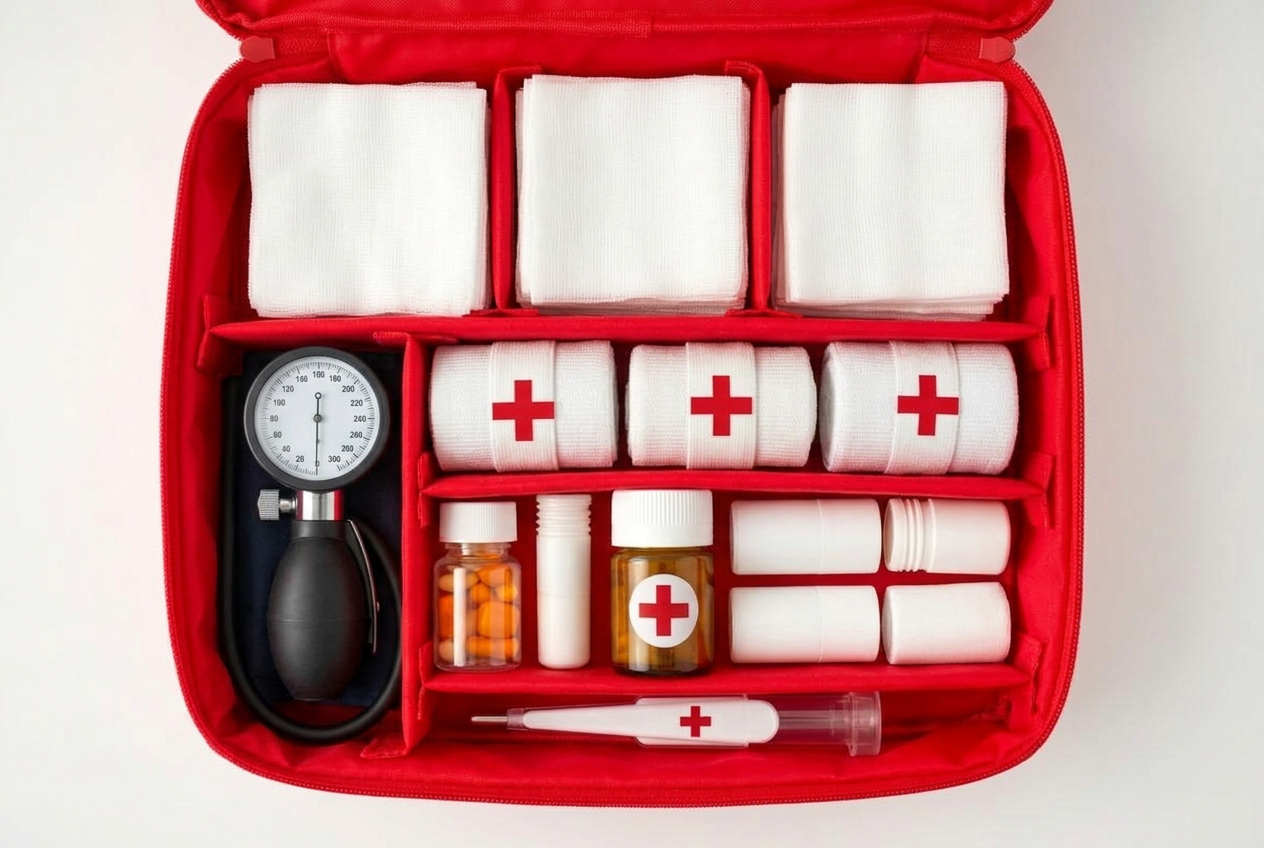
A prepared first aid kit turns small emergencies into small inconveniences. Households with prescription medications, seniors, or people with medical needs should keep at least a two-week supply on hand where possible.
Storage & rotation tips
- Store medications in a waterproof, temperature-stable bin.
- Print an emergency contact and medication list; laminate it.
- Check expirations twice a year — at daylight saving time is an easy reminder.
- Include gloves, a thermometer, tweezers, and any comfort items (like a favorite child's bandage design).
Budget alternative
A pre-built family first aid kit plus a $10 pharmacy top-up covers most needs.
Common mistake
Assuming your regular pharmacy will be open — always keep a printed prescription list.
Power Outage Essentials
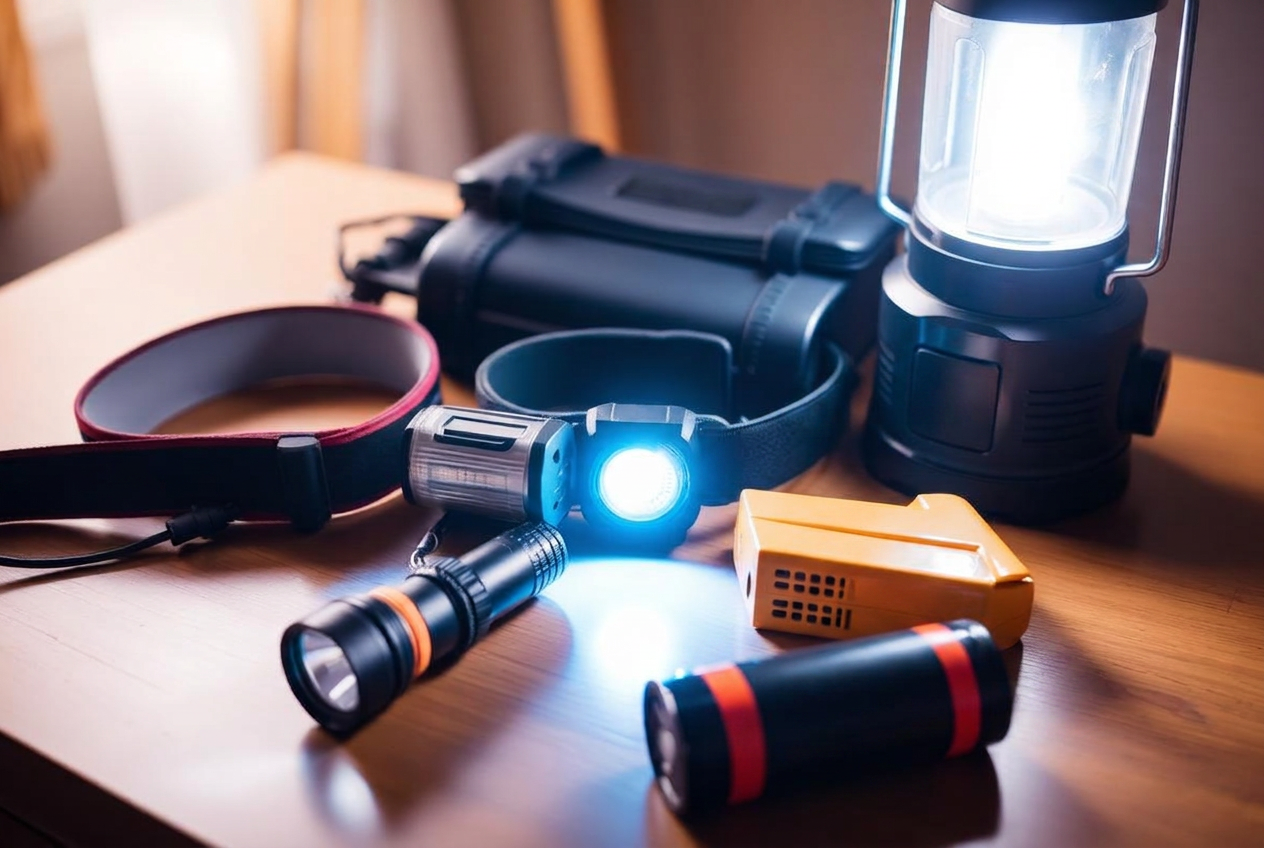
Why it matters
Lighting and power keep a house feeling like a home during an outage. A few well-chosen lights and a modest power station cover phones, medical devices, and morale.
Storage & rotation tips
- Keep at least one flashlight per bedroom, plus a headlamp for hands-free work.
- Store batteries in a labeled organizer, out of extreme heat or cold.
- A portable power station in the 300–1,000 Wh range runs phones, lamps, and small medical devices for days.
- Add a solar panel if you live somewhere sunny — it dramatically extends run time.
Budget alternative
Start with two LED flashlights, spare batteries, and a 20,000 mAh power bank.
Common mistake
Relying only on phone flashlights — they drain the battery you may need for communication.
Sanitation Supplies
Two weeks of basic hygiene supplies — toilet paper, soap, wipes, feminine hygiene products, and heavy-duty trash bags — is one of the easiest wins in home preparedness. Add hand sanitizer, a small bottle of bleach for water treatment, and a bucket with a tight lid as an emergency toilet if plumbing fails. Households with babies should double their wipe and diaper stockpile.
Communication
When the power goes out, information becomes as important as water. A battery or hand-crank NOAA weather radio gives you official alerts even when cell towers are overloaded. Keep phone chargers, a power bank, and a printed contact list with your kit. Every household should have a written family communication plan naming one out-of-state contact and two meeting points.
Shelter & Warmth
Warmth is life-safety in a winter power outage. Store at least one wool or fleece blanket per person, a sleeping bag rated for your climate, mylar emergency blankets, extra clothing layers, rain gear, and a tarp. Apartment residents can rely on layering and a small indoor-safe heater; rural households should plan for longer outages with heavier bedding.
Tools & Repair
A small toolkit turns big problems into small ones. Include a multi-tool, duct tape, rope or paracord, work gloves, plastic sheeting for broken windows, a wrench sized to your gas shut-off, and pliers. Keep a fire extinguisher in the kitchen and garage, and test smoke and carbon monoxide detectors monthly.
Pet Emergency Supplies
Pets are part of the family, and their needs are usually the easiest to forget. Pack a 72-hour supply of food and water, any medications, a leash and carrier, waste bags, and copies of vaccination records. Include a recent photo of each pet in case you become separated. Rural households with livestock should extend water storage accordingly.
Vehicle Emergency Kit
Your car is often your bridge to help. Keep a compact kit in the trunk with jumper cables, a small first aid kit, a flashlight, an emergency blanket, a folding shovel, water, energy bars, a phone charger, and a printed map. In winter climates add tire chains, cat litter for traction, and hand warmers. Check today's price on a pre-built vehicle emergency kit if you'd rather skip the assembly.
Emergency Documents
Store copies of IDs, insurance policies, medical records, a home inventory, key financial information, birth certificates, and passports in a waterproof, fireproof pouch. Keep an encrypted digital copy in cloud storage as a backup. Add $100–$300 in small bills — ATMs and card readers often fail during power outages.
Home Safety Equipment
A prepared home starts with the basics: working smoke detectors on every level, a carbon monoxide detector near sleeping areas, and a fire extinguisher in the kitchen and garage. Test each device monthly and replace batteries yearly. A NOAA weather radio ties this together, giving you an official heads-up when local alerts matter most.
Emergency Planning: 72 Hours and Beyond
Building a 72-hour kit
The 72-hour kit is the foundation of every family preparedness plan. Cover water, food, medical, light, and communication for three days, then expand from there. Once your 72-hour kit is set, work toward two weeks — that's the window most emergency management agencies now recommend for regional events.
Family communication plan
Write down one out-of-state contact everyone in the family can call or text. Decide on two meeting points: one near home for local emergencies (like a house fire) and one outside the neighborhood for larger events. Print the plan and store a copy in each go-bag and vehicle kit.
Evacuation vs. shelter-in-place
Some emergencies — wildfires, hurricanes, chemical spills — call for evacuation. Others — winter storms, tornadoes, air quality events — are safer to ride out at home ("bug in supplies"). Prepare for both. Keep a small go-bag near the main exit and a larger home kit stocked for shelter-in-place.
Recommendations by household
Supplies by emergency type
Build My Emergency Kit
Answer five quick questions to generate a personalized checklist, water and food requirements, and an estimated budget. Everything runs in your browser — nothing is saved or sent anywhere.
Priority purchases
- ●Water — 12 gal
- ●Food — 48 meals
- ●First aid kit + medications
- ●Flashlights + batteries
- ●NOAA weather radio
Your personalized checklist
- 12 gallons of drinking water (1 gal/person/day)
- 48 shelf-stable meals or 24 × 1,000-cal food rations
- First aid kit + 2-week supply of prescription medications
- NOAA weather radio (hand-crank or battery)
- 8 flashlights or headlamps with spare batteries
- Portable power bank (20,000+ mAh) and phone charging cables
- Hygiene supplies: toilet paper, soap, wipes, trash bags
- Mylar emergency blankets — one per person
- Waterproof folder with copies of IDs, insurance, medical records
- $100–$300 emergency cash in small bills
Emergency Supply Budget Calculator
See what it would take to close the gap between what you have and what you'd like to have — spread over the next six months.
Printable master checklist
| ✓ | Category | Item | Qty | Expires | Storage |
|---|---|---|---|---|---|
| Water | Drinking water | Cool, dark closet or pantry | |||
| Water | Water storage containers | Cool, dark closet or pantry | |||
| Water | Water purification tablets | Cool, dark closet or pantry | |||
| Water | Water filters | Cool, dark closet or pantry | |||
| Food | Canned foods | Dry pantry, 50–70°F | |||
| Food | Freeze-dried meals | Dry pantry, 50–70°F | |||
| Food | Protein bars | Dry pantry, 50–70°F | |||
| Food | Peanut butter | Dry pantry, 50–70°F | |||
| Food | Rice | Dry pantry, 50–70°F | |||
| Food | Pasta | Dry pantry, 50–70°F | |||
| Food | Oatmeal | Dry pantry, 50–70°F | |||
| Food | Shelf-stable milk | Dry pantry, 50–70°F | |||
| Food | Baby formula | Dry pantry, 50–70°F | |||
| Food | Manual can opener | Dry pantry, 50–70°F | |||
| Medical | First aid kit | Waterproof bin, accessible | |||
| Medical | Prescription medications | Waterproof bin, accessible | |||
| Medical | Pain relievers | Waterproof bin, accessible | |||
| Medical | Bandages | Waterproof bin, accessible | |||
| Medical | Thermometer | Waterproof bin, accessible | |||
| Medical | Medical gloves | Waterproof bin, accessible | |||
| Medical | Emergency contact list | Waterproof bin, accessible | |||
| Lighting & Power | Flashlights | Nightstand + central bin | |||
| Lighting & Power | Lanterns | Nightstand + central bin | |||
| Lighting & Power | Batteries | Nightstand + central bin | |||
| Lighting & Power | Solar chargers | Nightstand + central bin | |||
| Lighting & Power | Portable power station | Nightstand + central bin | |||
| Lighting & Power | Power banks | Nightstand + central bin | |||
| Lighting & Power | Extension cords | Nightstand + central bin | |||
| Communication | NOAA weather radio | With go-bag | |||
| Communication | Phone chargers | With go-bag | |||
| Communication | Printed emergency contacts | With go-bag | |||
| Communication | Family communication plan | With go-bag | |||
| Hygiene | Toilet paper | Bathroom + storage bin | |||
| Hygiene | Soap | Bathroom + storage bin | |||
| Hygiene | Toothpaste | Bathroom + storage bin | |||
| Hygiene | Feminine hygiene products | Bathroom + storage bin | |||
| Hygiene | Baby wipes | Bathroom + storage bin | |||
| Hygiene | Trash bags | Bathroom + storage bin | |||
| Hygiene | Hand sanitizer | Bathroom + storage bin | |||
| Shelter & Warmth | Blankets | Closet or under bed | |||
| Shelter & Warmth | Sleeping bags | Closet or under bed | |||
| Shelter & Warmth | Emergency (mylar) blankets | Closet or under bed | |||
| Shelter & Warmth | Extra clothing | Closet or under bed | |||
| Shelter & Warmth | Rain gear | Closet or under bed | |||
| Shelter & Warmth | Tarps | Closet or under bed | |||
| Tools | Multi-tool | Garage or utility closet | |||
| Tools | Fire extinguisher | Garage or utility closet | |||
| Tools | Duct tape | Garage or utility closet | |||
| Tools | Rope | Garage or utility closet | |||
| Tools | Work gloves | Garage or utility closet | |||
| Tools | Plastic sheeting | Garage or utility closet | |||
| Tools | Wrench | Garage or utility closet | |||
| Tools | Pliers | Garage or utility closet | |||
| Important Documents | IDs | Fireproof safe + cloud backup | |||
| Important Documents | Insurance | Fireproof safe + cloud backup | |||
| Important Documents | Medical records | Fireproof safe + cloud backup | |||
| Important Documents | Emergency contacts | Fireproof safe + cloud backup | |||
| Important Documents | Home inventory | Fireproof safe + cloud backup | |||
| Important Documents | Financial information | Fireproof safe + cloud backup | |||
| Important Documents | Birth certificates | Fireproof safe + cloud backup | |||
| Important Documents | Passports | Fireproof safe + cloud backup | |||
| Pet Supplies | Food | With household kit | |||
| Pet Supplies | Water | With household kit | |||
| Pet Supplies | Medication | With household kit | |||
| Pet Supplies | Leash | With household kit | |||
| Pet Supplies | Carrier | With household kit | |||
| Pet Supplies | Vaccination records | With household kit | |||
| Pet Supplies | Waste bags | With household kit |
Common Mistakes to Avoid
- !Storing expired food or medication
- !Forgetting prescription medications
- !Not rotating supplies twice a year
- !Having too little water on hand
- !Ignoring pet supplies
- !Forgetting batteries for radios and flashlights
- !Storing supplies in inaccessible places
- !Not having backup lighting
- !Forgetting important documents
- !Skipping a written family communication plan
Frequently Asked Questions
What should every emergency home kit contain?+
At minimum: water (1 gallon/person/day), non-perishable food for 72 hours, a first aid kit, prescription medications, flashlights and batteries, a NOAA weather radio, hygiene supplies, warm blankets, copies of important documents, and a written family communication plan.
How much water should I store?+
Store at least one gallon per person per day — half for drinking and half for hygiene and cooking. Aim for a 72-hour minimum and work toward a two-week supply as space allows.
How much food should I keep?+
Plan for roughly 2,000 calories per person per day using shelf-stable foods your family already eats. Start with 3 days, then expand to 2 weeks. Rotate items using the first-in, first-out method.
How long should an emergency kit last?+
A basic kit should sustain your household for at least 72 hours without outside assistance. Many preparedness agencies now recommend building toward two weeks for larger regional emergencies.
How often should supplies be replaced?+
Check expiration dates every six months when you change your clock for daylight saving time. Rotate food and water, test batteries and radios, and update prescription medications.
Where should emergency supplies be stored?+
Keep supplies in a cool, dry, accessible location known to every family member — a hall closet, pantry, or labeled bins under a bed. Store a smaller grab-and-go bag near the main exit.
How can I prepare on a budget?+
Add one or two items to your grocery cart each week: a case of water, a can opener, extra batteries, a first aid kit. Buy store brands, use coupons, and prioritize water, food, and light before higher-cost gear.
Should I keep emergency cash?+
Yes — keep $100–$300 in small bills in a waterproof pouch with your documents. ATMs and card readers often fail during power outages.
What emergency supplies do pet owners need?+
Pack 72 hours of food and water, any medications, a leash and carrier, waste bags, vaccination records, and a recent photo of your pet in case you get separated.
How often should I update my emergency plan?+
Review your family plan at least once a year and any time your household changes — a move, new baby, new pet, or new medical need. Practice it twice a year with a short drill.